CAN FD Explained: Why Modern Vehicles Send More Data (and What It Means for Diagnostics)
TL;DR
CAN FD is an updated version of the traditional CAN bus communication system used in modern vehicles. It allows modules to transfer larger amounts of data at higher speeds, helping support advanced driver assistance systems, infotainment features, EV technology, and modern automotive diagnostics. For technicians, this means that stronger network knowledge, scan tool interpretation, and communication troubleshooting skills are becoming increasingly important in today’s repair shops.
Modern vehicles contain dozens of electronic control modules constantly communicating with one another. Systems such as engine management, braking, steering, infotainment, driver assistance technology, climate control, and battery management all rely on network communication to function properly.
For years, the CAN bus system handled this communication efficiently. However, newer vehicles now process significantly more information than older models ever needed to manage. As a result, many manufacturers are transitioning toward CAN FD, which stands for Controller Area Network Flexible Data-Rate.
For today’s technicians, understanding these vehicle networks is becoming just as important as understanding mechanical systems.
Why Modern Vehicles Need Faster Data Networks
Modern vehicles now include far more electronic features than vehicles built even ten years ago. Traditional CAN bus systems were designed for smaller amounts of communication traffic. While still effective for many functions, they can become limited when multiple high-speed systems need to exchange information simultaneously.
This is where CAN FD becomes important.
Unlike traditional CAN systems, CAN FD allows:
- Faster communication speeds
- Larger data payloads
- Improved communication efficiency
- Reduced transmission delays
- Better support for advanced vehicle technologies
These improvements help modern vehicles process information more quickly while maintaining stable communication between modules. As vehicles become more software-driven, communication speed and reliability continue growing in importance.
What’s the Difference Between CAN Bus and CAN FD?
The biggest difference between traditional CAN bus systems and CAN FD is data transmission capability. Traditional CAN networks were originally developed to handle smaller data packets at lower speeds. This worked well for older vehicles with fewer electronic systems.
However, CAN FD expands network capability by allowing:
- Higher bit rates during data transmission
- Larger message sizes
- Faster module communication
- Improved system responsiveness
Modern vehicles can move more information between modules more efficiently. For automotive training students performing automotive diagnostics, this change affects how scan tools communicate with the vehicle.
Many newer vehicles require updated diagnostic equipment capable of reading CAN FD systems properly. An older OBD2 scanner may still connect to the vehicle, but it may not fully communicate with newer network architectures or advanced modules.
What Symptoms Can Appear During Communication Faults?
When vehicle communication networks develop faults, symptoms can vary widely depending on which modules lose communication.
Some common symptoms may include:
- Warning lights appearing on the dashboard
- Multiple system faults occurring simultaneously
- Intermittent sensor failures
- Loss of communication with scan tools
- Starting issues
- Malfunctioning driver assistance systems
- Infotainment or display problems
- Reduced vehicle performance
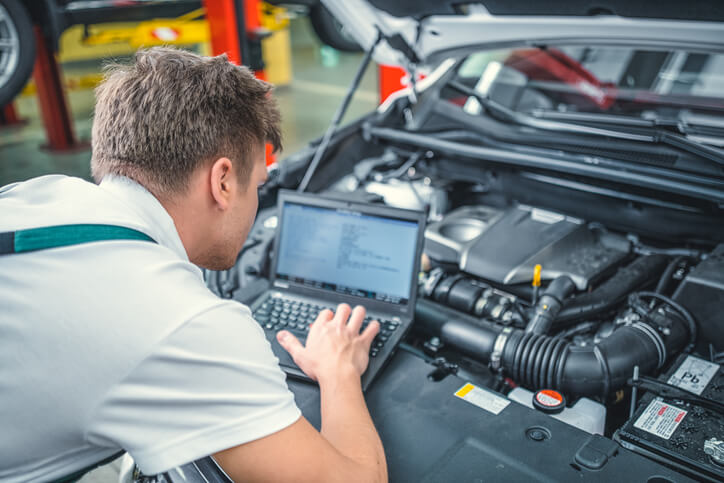
Because modern systems are interconnected, a single communication problem can sometimes affect multiple vehicle functions at once. Technicians performing automotive diagnostics often use scan tools, wiring diagrams, oscilloscopes, and network testing procedures to identify communication faults accurately.
Why Network Knowledge Matters for Technicians
As vehicle systems continue evolving, employers increasingly value technicians who understand electronic communication systems alongside traditional mechanical repairs.
Strong automotive technician skills now include:
- Electrical diagnostics
- Network communication analysis
- Scan tool interpretation
- Software update procedures
- Module programming awareness
- Electronic troubleshooting
This is one reason many students entering auto mechanic training programs are spending more time learning electronics, diagnostics, and communication systems alongside traditional repair procedures.
How Training Helps Students Understand Vehicle Networks
Students attending automotive training programs today are preparing for an industry where software and electronics play a major role in repair work.
At CATI school, students learn:
- Basic vehicle network operation
- Electrical circuit testing
- Scan tool usage
- Communication fault diagnostics
- Module interaction principles
- Modern diagnostic procedures
These skills help prepare students for evolving service environments where communication systems influence nearly every area of vehicle operation.
For students interested in becoming automotive service technicians, understanding network communication systems can provide an important advantage as modern vehicle technology continues to advance.
Are you interested in pursuing automotive service technician training?
Contact the CATI school for more information.
Key Takeaways
- CAN FD allows modern vehicles to transfer larger amounts of data at higher speeds
- Traditional CAN bus systems remain important, but newer vehicles increasingly rely on faster communication networks
- Modern automotive diagnostics often involve analyzing communication between electronic control modules
- An advanced OBD2 scanner may be required for proper communication with newer vehicle systems
- Strong automotive technician skills increasingly include network diagnostics and electronic troubleshooting
FAQ
What’s the Difference Between CAN Bus and CAN FD?
Traditional CAN systems transfer smaller data packets at lower speeds, while CAN FD supports larger data payloads and faster communication rates for modern vehicle systems.
What symptoms can appear during communication faults?
Symptoms may include warning lights, communication errors, starting problems, malfunctioning safety systems, infotainment issues, and intermittent electronic faults.
Why do modern vehicles need higher-speed networks?
Modern vehicles contain advanced electronics, driver assistance systems, infotainment systems, and EV technologies that generate far more data than older vehicle networks were designed to manage.
Do training programs teach vehicle network fundamentals?
Yes. Many modern automotive programs introduce students to electrical diagnostics, communication systems, scan tool usage, and vehicle network fundamentals.