Leak-Down Test vs Compression Test: Which One Gives Better Answers?
TL;DR
A leak-down test and a compression test both assess engine health, but they serve different purposes. Compression tests show how much pressure an engine produces, while leak-down tests help identify where that pressure is being lost. Understanding both is essential for accurate automotive diagnostics.
Understanding when to use a leak-down test versus a compression test is a key skill for any automotive service technician. While both tests evaluate engine condition, they provide different types of information that guide the diagnostic process.
An engine compression test gives a quick snapshot of how well each cylinder is performing, but it doesn’t always explain the cause of a problem. This is where a leak-down test becomes valuable, offering deeper insight into internal engine issues.
In modern automotive diagnostics, knowing how to interpret these results and when to apply each test is an essential part of effective troubleshooting and a core component of auto mechanic training.
What Does a Compression Test Tell You?
A compression test measures the pressure generated inside each cylinder while the engine is cranking. This helps technicians determine whether the engine is producing adequate compression to operate efficiently.
Low compression in one or more cylinders can indicate problems such as worn piston rings, leaking valves, or a damaged head gasket. However, while the test highlights that a problem exists, it does not clearly identify its exact source.
As explored in automotive service technician training, compression testing is often used as a first step to quickly assess engine health before moving on to more detailed diagnostics.
What Does a Leak-Down Test Measure?
What does a leak-down test measure that compression doesn’t?
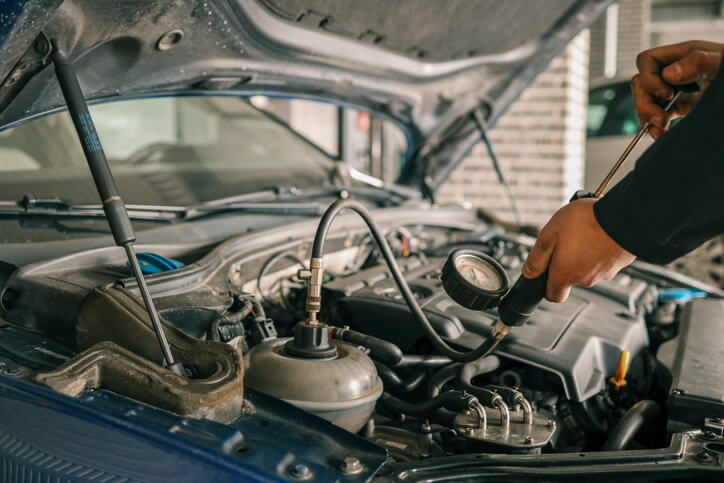
A leak-down test goes a step further by measuring how well each cylinder holds pressure rather than how much it produces. Compressed air is introduced into the cylinder, and the technician observes how much air escapes and where it is leaking from.
This allows technicians to pinpoint the source of the issue. For example, air escaping through the intake may indicate a valve problem, while air leaking into the crankcase can point to worn piston rings.
This level of detail makes the leak-down test a powerful diagnostic tool when accuracy is critical.
What Leak Percentage Is Considered Acceptable?
What leak percentage is considered acceptable?
Leak-down test results are typically expressed as a percentage, indicating how much air is escaping from the cylinder. Lower percentages represent better sealing and overall engine health.
In most cases, a small amount of leakage is normal, especially in higher-mileage engines. However, higher percentages suggest significant wear or damage that requires attention. Technicians also consider engine condition, consistency across cylinders, and where the leakage occurs to form a complete diagnosis.
How Leak-Down Tests Identify Specific Problems
Can leak-down results point to valves vs rings vs head gasket?
One of the main advantages of a leak-down test is its ability to identify the location of a problem. By listening for where air escapes, technicians can determine which component is at fault.
Air escaping through the intake system often indicates an issue with intake valves, while leakage through the exhaust suggests exhaust valve problems. If air is heard in the crankcase, it may point to worn piston rings. In some cases, bubbles in the coolant can indicate a head gasket failure.
This targeted approach allows technicians to move beyond general symptoms and focus directly on the root cause.

When to Use Each Test in Automotive Diagnostics
In practice, technicians often use both tests together rather than choosing one over the other. A compression test is typically performed first because it is quick and provides an overall assessment of engine condition.
If the results indicate a problem, a leak-down test is then used to investigate further and identify the exact cause. This combination ensures a more accurate and efficient diagnostic process.
This layered approach reflects how modern automotive diagnostics are performed in real-world repair environments. Hands-on experience in auto mechanic training environments allows students to work with real engines and diagnostic tools.
Are These Tests Taught in Training Programs?
Are these tests taught hands-on in technician training?
Yes. Both compression testing and leak-down testing are typically taught as part of automotive service technician training programs at CATI School. Students learn not only how to perform the tests but also how to interpret the results in a practical context.
This practical training helps them understand how different faults present themselves and how to confirm issues accurately. Developing these skills early prepares students for the demands of professional automotive work.
Are you looking for comprehensive automotive training?
Contact CATI School for more information.
Key Takeaways
- A leak-down test identifies where engine compression is being lost
- A compression test measures how much pressure each cylinder produces
- Compression tests show symptoms, while leak-down tests help identify causes
- Both tests are often used together for accurate diagnostics
- These diagnostic methods are essential skills in auto mechanic training
FAQ
What does a leak-down test measure that compression doesn’t?
It measures how well a cylinder holds pressure and identifies where air is leaking from.
What leak percentage is considered acceptable?
Lower percentages indicate better engine health, while higher percentages suggest wear or damage.
Can leak-down results point to valves vs rings vs head gasket?
Yes, technicians can identify the source of leakage based on where air escapes.
Are these tests taught hands-on in technician training?
Yes, they are core diagnostic skills taught through practical, hands-on training.