Mechanic Apprenticeship in Canada: What the First 90 Days Usually Look Like
TL;DR
A mechanic apprenticeship starts with basic tasks, observation, and skill-building. In the first 90 days, new apprentices focus on learning shop routines, developing good habits, and supporting experienced technicians. Strong fundamentals and attitude matter just as much as technical knowledge.
Starting a mechanic apprenticeship is often the first real step into the automotive industry, and it can feel like a big transition from the classroom to the shop floor. The pace is faster, expectations are higher, and every task contributes to building real-world experience.
In the early days, new apprentices are not expected to know everything. Instead, they are expected to learn quickly, follow instructions, and develop strong work habits. For anyone coming from auto mechanic training, this period is where theory turns into practical skill.
Understanding what the first 90 days look like can help you approach your apprenticeship with confidence and set the right expectations from the start.
What Tasks Do New Apprentices Start With?
In most shops, new apprentices begin with foundational tasks that support daily operations. This often includes basic maintenance work such as oil changes, tire services, inspections, and assisting senior technicians.
These tasks may seem simple, but they are essential for building familiarity with tools, shop workflow, and safety procedures. Over time, apprentices begin to take on more responsibility as they demonstrate reliability and attention to detail.
This gradual progression is a key part of how a mechanic apprenticeship develops practical skills.
Building Trust in the First 90 Days of a Mechanic Apprenticeship
What habits help apprentices earn trust quickly in a shop? In the early stages, attitude and consistency matter just as much as technical ability. Showing up on time, staying organized, and paying attention to instructions are all critical.
Technicians and shop managers notice apprentices who are willing to ask questions, take initiative, and follow through on tasks. Even small actions, like keeping a clean workspace or double-checking work, can build credibility.
These habits form the foundation of strong automotive technician skills, helping apprentices become reliable members of the team.
How Training and Apprenticeship Work Together
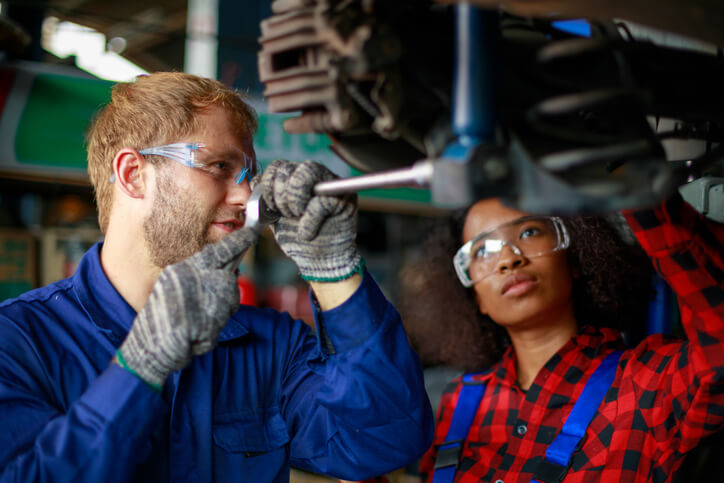
How do training and apprenticeship work together? A mechanic apprenticeship builds on the knowledge gained through auto mechanic school and structured automotive training. While training programs focus on theory and controlled practice, apprenticeships provide exposure to real vehicles and real customer concerns.
Concepts learned during training, such as diagnostics, tool use, and safety procedures, are applied in a practical setting. This combination accelerates learning and helps apprentices understand how different systems work together in real-world conditions.
For those exploring how to become a mechanic, this blend of education and hands-on experience is essential.
What Skills Matter Most Early On?
What skills should you build before your first shop job? In the first 90 days, technical knowledge is important, but foundational skills often make the biggest difference. Attention to detail, time management, and communication all play a role in how quickly an apprentice progresses.
Basic mechanical understanding, tool familiarity, and a willingness to learn are also key. These skills are typically introduced during auto mechanic training, giving students a starting point before entering the shop.
As apprentices gain experience, these fundamentals expand into more advanced automotive technician skills.
What to Expect as You Progress
As the first 90 days pass, apprentices begin to take on more complex tasks. This may include assisting with diagnostics, performing repairs under supervision, and working more independently.
Progress depends on both performance and consistency. Apprentices who demonstrate strong habits and a willingness to learn often move forward more quickly.
At this stage, the connection between training and real-world experience becomes even clearer, reinforcing the value of starting with a solid foundation.
Is This Path Right for You?
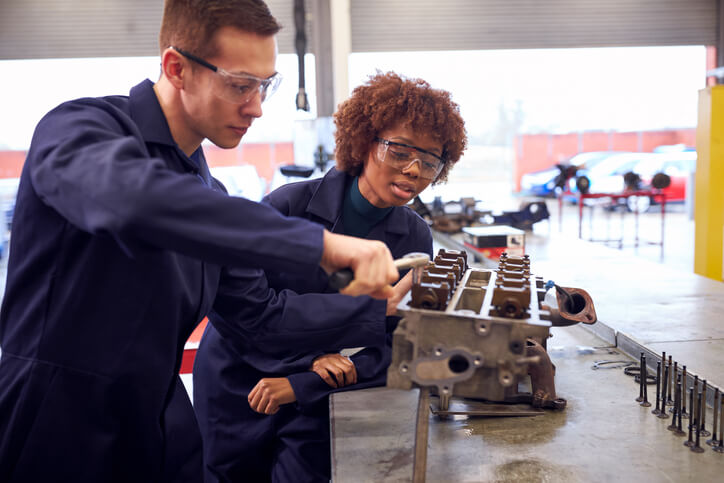
A mechanic apprenticeship is ideal for individuals who enjoy hands-on work, problem-solving, and continuous learning. The environment can be demanding, but it also offers clear opportunities for growth and skill development. For many, it’s the most direct path to becoming a skilled automotive service technician and building a long-term career in the industry.
Would you like to explore training programs at CATI School?
Contact us for more information.
Key Takeaways
- A mechanic apprenticeship begins with basic tasks and hands-on learning
- Strong habits and consistency help apprentices earn trust quickly
- Training and real-world experience work together to build skills
- Early success depends on foundational automotive technician skills
- Apprenticeships are a key step in learning how to become a mechanic
FAQ
What habits help apprentices earn trust quickly in a shop?
Punctuality, organization, attention to detail, and a willingness to learn are essential.
How do training and apprenticeship work together?
Training provides foundational knowledge, while apprenticeships apply that knowledge in real-world settings.
What skills should you build before your first shop job?
Basic mechanical understanding, tool familiarity, and strong work habits are key.
What tasks do new apprentices usually start with?
They typically begin with basic maintenance tasks and assisting experienced technicians.