
Knock Sensor Problems: Detonation, Timing Retard, and Diagnostic Clues
In Brief: Bad Knock Sensor Symptoms: Timing and Diagnostic Clues
- A knock sensor detects abnormal combustion that can produce damaging pressure waves.
- The ECU can respond to detected knock by retarding ignition timing.
- Bad knock sensor symptoms may include reduced performance, warning lights, or changes in fuel economy, but these are not unique to the sensor.
- Technicians investigate codes, wiring, sensor installation, live data, and possible causes of real detonation before replacing components.
A driver notices the engine feels less responsive and the check engine light is on. A scan reveals a knock sensor code. Does that mean the knock sensor should immediately be replaced?
Not necessarily.
Modern engine-management systems continuously balance performance with engine protection. Knock sensing is part of that process. Bosch describes knock sensors as devices that reliably detect engine knock and contribute to engine performance and durability. When knock is detected, the ECU can adjust ignition timing to reduce it.
For students in our auto mechanic training, knock sensor problems provide another example of why a trouble code should begin a diagnosis rather than end one.
What Does a Knock Sensor Do?
What does a knock sensor do? A knock sensor detects vibrations associated with abnormal combustion and sends information to the engine control system so it can respond.
During normal combustion, the air-fuel mixture should burn in a controlled manner. Detonation occurs when portions of the remaining mixture auto-ignite after combustion has begun, producing rapid pressure waves associated with the characteristic knocking or pinging sound. Prolonged detonation can contribute to serious engine damage.
The knock sensor gives the ECU another way to monitor what is happening inside the engine.
When combustion knock is detected, the ECU can retard ignition timing until the knock is no longer present. DENSO explains that this knock feedback allows modern engine-management systems to adjust timing in response to operating conditions that other sensors may not immediately detect.
That protective response is important—but timing retard can have consequences for performance.
What Are the Symptoms of a Bad Knock Sensor?
What are the symptoms of a bad knock sensor? Possible clues can include an illuminated check engine light, reduced engine performance, changes in fuel consumption, stored knock-sensor faults, or unusual ignition-timing behaviour.
Why might power decrease?
Optimal ignition timing helps an engine convert combustion pressure into useful force. If ignition is retarded too far, combustion pressure rises later in the power stroke and produces less useful force on the piston.
However, these bad knock sensor symptoms do not prove that the sensor itself is defective.
The engine could actually be experiencing abnormal combustion. A fault could also involve sensor wiring, a connector, incorrect installation or torque, or another engine-management issue. Depending on the vehicle, mechanical noise can also complicate knock detection.
That is why students in our automotive training learn to interpret symptoms alongside codes and test results rather than diagnosing from one clue.
Can a Bad Knock Sensor Cause Power Loss or Poor Fuel Economy?
Can a bad knock sensor cause power loss or poor fuel economy? It can contribute to changes in performance or fuel consumption if the engine-management system cannot use knock information correctly and adopts a more conservative ignition strategy.
Ignition timing has a direct relationship with efficient combustion. DENSO notes that overly retarded timing reduces the force acting on the piston, while optimal timing supports engine performance, economy, and emissions.
The important diagnostic question is why timing is being retarded.
If the engine is genuinely knocking, timing retard may be the control system working correctly to protect the engine. If knock information is unreliable because of a sensor or circuit fault, the diagnostic path is different.
Technicians therefore avoid assuming that poor acceleration plus a knock-related code equals a failed sensor.
How Do Technicians Test a Knock Sensor?
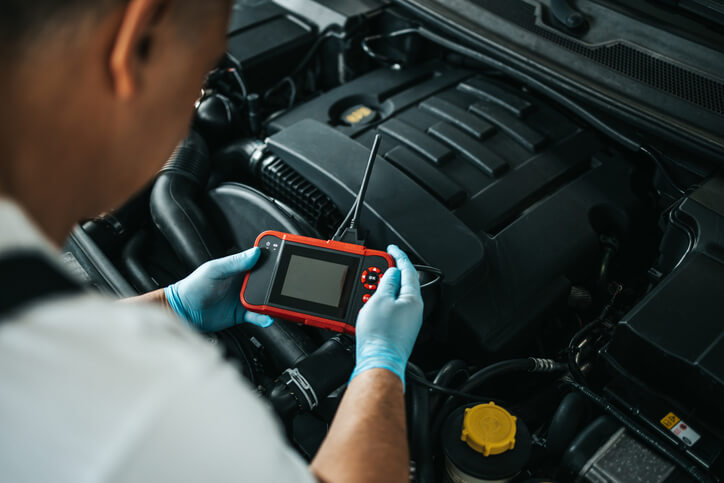
How do technicians test a knock sensor? The exact procedure depends on the vehicle, but diagnosis can involve checking trouble codes and service information, inspecting the sensor and wiring, examining scan data, and testing electrical signals with suitable diagnostic equipment.
A logical process may include:
- Retrieve codes and freeze-frame data. Note when the fault occurred and look for other engine-management codes.
- Inspect wiring and connectors. Check for damage, corrosion, poor connections, or routing problems.
- Check sensor installation. Mounting location and tightening specifications matter because the sensor detects engine vibration.
- Review live data. Depending on the vehicle, technicians may examine knock activity and ignition-timing corrections under appropriate operating conditions.
- Evaluate actual engine operation. Determine whether genuine engine detonation or another mechanical condition could explain the readings.
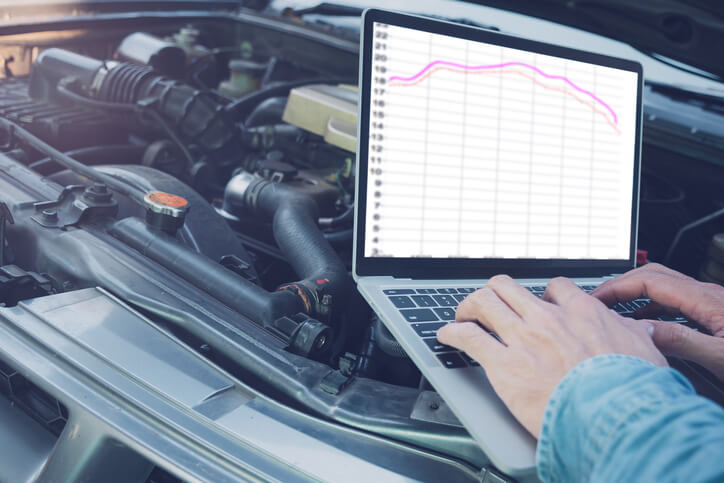
- Perform specified electrical tests. Vehicle service information may call for circuit measurements or signal analysis using a multimeter or oscilloscope.
Modern diagnostic equipment can measure voltage, resistance, current, and real-time electrical signal variations, while Bosch specifically includes knock-detection systems and codes among ignition-system diagnostic training topics.
At CATI school, this type of diagnostic thinking helps future technicians learn an important habit: confirm the cause before replacing the component.
Why Doesn’t a Knock Sensor Code Automatically Mean a Bad Sensor?
A knock sensor code tells technicians that the control module has detected a problem associated with the knock-sensing system or its expected operation. It does not, by itself, identify the failed part.
The next step is evidence gathering.
For example, a technician may need to determine whether the circuit has an electrical fault, whether the sensor is installed correctly, whether the engine is producing genuine abnormal combustion, or whether another mechanical or engine-management condition is affecting the system.
The same principle applies throughout modern vehicle diagnosis: the code points toward the system requiring investigation.
What Can Cause Engine Detonation?
Engine detonation is abnormal combustion, not another name for a failed knock sensor.
Advanced ignition timing can raise cylinder pressure too early and contribute to knock. Combustion conditions, fuel quality, engine temperature, mixture, and other factors can also influence an engine’s tendency to knock. Modern engine-management systems monitor multiple inputs when determining ignition timing.
This distinction matters because replacing a functioning knock sensor will not correct the underlying condition if the engine is genuinely detonating.
Technicians need to ask two separate questions:
Is the knock-sensing system reporting correctly?
Why is the engine knocking, if real knock is present?
Separating those questions can prevent unnecessary repairs.
What Affects Knock Sensor Replacement Cost?
Knock sensor replacement cost varies substantially by vehicle because the price of the sensor is only one part of the repair.
Accessibility can make a major difference. On some engines, a knock sensor is relatively accessible. On others, reaching it may require removing intake components or other parts, increasing labour time. Diagnosis, replacement hardware, gaskets or seals required during disassembly, and regional labour rates can also affect the final amount.
For that reason, a universal replacement-cost estimate is less useful than a vehicle-specific quote based on confirmed diagnosis and required labour.
Are you looking for comprehensive auto mechanic training?
Contact CATI School for more information.
Key Takeaways
- Knock sensors help the ECU identify abnormal combustion and protect the engine.
- The ECU may retard ignition timing when knock is detected.
- Bad knock sensor symptoms overlap with many other engine and electrical problems.
- Genuine detonation and a knock-sensor fault are different conditions.
- A knock sensor code should lead to testing rather than automatic parts replacement.
- Replacement costs depend heavily on sensor location, vehicle design, labour, and any components that must be removed for access.
FAQ
What Does a Knock Sensor Do?
A knock sensor detects vibrations associated with abnormal combustion and sends information to the ECU. The engine-management system can use this information to adjust ignition timing and help protect the engine.
What Are the Symptoms of a Bad Knock Sensor?
Possible bad knock sensor symptoms include a check engine light, reduced performance, changes in fuel economy, stored trouble codes, and unusual ignition-timing behaviour. Testing is required because these symptoms can have other causes.
Can a Bad Knock Sensor Cause Power Loss or Poor Fuel Economy?
Yes, a knock-sensing fault can contribute to reduced performance or changes in fuel consumption if the engine-management system changes its ignition strategy. However, genuine knock and other engine faults can produce similar effects.
How Do Technicians Test a Knock Sensor?
Technicians can review codes and freeze-frame information, inspect the sensor and wiring, verify installation, analyze live data, evaluate the engine for actual knock, and perform vehicle-specific electrical or signal tests.